Table of contents
Atopic eczema, also known as atopic dermatitis (AD), is one of the most common chronic, relapsing inflammatory skin conditions. Its main symptoms are intense itching, dryness and eczematous patches, and it is driven by a weakened skin barrier and an abnormal immune response. Atopic eczema usually starts in early childhood, but it can last for years or appear for the first time in adulthood. In this article, we explain what atopy is, what atopic skin looks like, how atopic eczema is treated and how to care for your skin day to day to reduce flare-ups.
What is atopic eczema?
Atopic eczema is a chronic, relapsing inflammatory skin condition with complex causes, in which a weakened skin barrier plays a key role. The skin of a person with atopic eczema is less able to retain water, becomes dry and reacts more strongly to external factors, and periods of relative calm (remission) alternate with flare-ups [1,2].
Atopic eczema is very common. According to data compiled in the recommendations of the Polish Dermatological Society, in Poland it affects 4.7–9.2% of children and 0.9–1.4% of adults, while worldwide it may affect up to 20% of children [3,4]. In around half of patients, the first symptoms appear before the age of one, but in one in four adults with atopic eczema the condition only develops in adulthood [3].
“Proper care for atopic skin is not just an add-on to treatment. It is part of the core management, because it addresses one of the key problems in atopic eczema – an impaired skin barrier.” – Dr Leszek Blicharz, MD, PhD, dermatologist
Atopy vs atopic eczema – what’s the difference?
Atopy is an inherited tendency to overproduce IgE antibodies in response to common allergens, whereas atopic eczema is a specific skin condition [5]. Atopy can show up in different ways – as atopic eczema, allergic rhinitis (hay fever), asthma or food allergy. Not everyone with atopic eczema has raised IgE levels, and not everyone with atopy develops atopic eczema.
In some children with atopic eczema, other atopic conditions appear in later years – this is known as the atopic march. It is estimated that around 34% of patients with atopic eczema develop allergic rhinitis and 20–35% develop asthma [3]. It is increasingly emphasised that a damaged skin barrier may encourage the development of allergies, rather than the other way round [4,6].
What causes atopic eczema?
The causes of atopic eczema are multifactorial – the condition is influenced by genetic predisposition, an impaired skin barrier, an abnormal immune response and environmental factors. There is no single, universal cause of atopic eczema.
One factor involved in how the condition develops is filaggrin – a protein essential for building a healthy skin barrier. Loss-of-function variants in the FLG gene, which encodes filaggrin, are among the best-understood genetic risk factors for atopic eczema. However, they are not found in all patients, so they cannot be seen as the only cause of the condition [1,6]. The risk of atopic eczema is also higher when the parents have atopic conditions.
Atopic eczema is not just a problem of skin barrier dysfunction, though. It also involves an abnormal immune response dominated by type 2 (Th2) inflammation. The skin microbiome matters too – the skin of people with atopic eczema is more often colonised by Staphylococcus aureus, whose toxins can further damage the skin barrier and worsen inflammation [7].
External factors also affect the course of the condition: detergents, frequent contact with water, sweat, overheating, dry air or irritating fabrics (e.g. wool). However, they should not automatically be seen as causes of atopic eczema – more often they are triggers that make the symptoms of an existing condition worse. It’s also worth telling an eczema flare-up apart from simple irritation or contact allergy – read more about this in our article on how to tell skin irritation from an allergic reaction.
Atopic eczema symptoms – what does atopic skin look like?
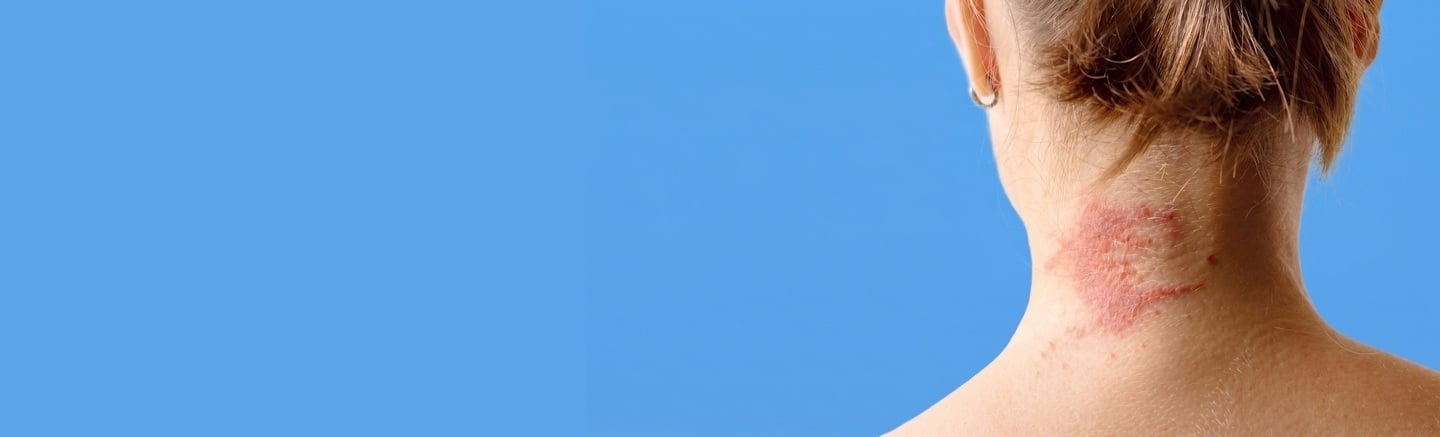
The most characteristic symptom of atopic eczema is itching, often accompanied by dryness, roughness, redness and eczematous patches. Symptoms vary widely and depend on age, the location of the patches, the severity of the condition and how long it has lasted. When the condition is long-standing, the skin may thicken – this is called lichenification.
What atopic eczema looks like changes with age [20]:
- in babies, the patches most often affect the cheeks and the outer surfaces of the arms and legs,
- in older children (usually over the age of two), they tend to appear in the creases of the elbows and behind the knees,
- in adults, they usually appear in the elbow creases, behind the knees, on the neck, face and hands.
Read also: Worrying Skin Lesions in Children – Causes and Treatment
Itching, dryness and redness in atopic skin
Itching, dryness and redness are the three symptoms that most often lead people with atopic skin to seek help. The itching in atopic eczema can be very intense and gets worse in the evening and at night, so it can disrupt sleep – in both adults and children – and affect the whole family.
Scratching itchy skin damages the outer layer of the skin even further, keeping up the vicious circle of itching and skin barrier damage. The skin loses water, becomes rough, flakes and is more prone to irritation. That’s why relieving dryness and itching is not just a matter of comfort but also an important way to break this cycle.
Patches on the face are particularly troublesome – on the cheeks, around the mouth, on the forehead or the eyelids. The skin becomes dry, red and prone to flaking. Bear in mind, however, that redness, dryness or itching on the face do not always mean atopic eczema – similar symptoms occur in other skin conditions, so patches that persist or get worse should be checked by a dermatologist. You can find out more in our article Very Dry Skin on the Face – What to Do About Flaking and Stinging?
Flare-ups and remission in atopic eczema
Atopic eczema follows a relapsing course – periods of remission, when the skin is in better condition, alternate with flare-ups, during which the inflammation, itching and eczematous patches get worse. How long these periods last varies greatly from person to person.
Flare-ups can be triggered by many factors: infections, stress, sweat, overheating, contact with detergents, dry air during the heating season or irritating fabrics [8,9]. The skin barrier needs support even when there are no visible patches – regular care during remission helps extend the time between flare-ups [10].
Atopic eczema in adults – what are its features?
Atopic eczema in adults may continue from childhood or appear for the first time in adulthood. In adults, the patches are usually found in the elbow creases, behind the knees, on the neck, face and hands, and the skin is more likely to become lichenified. However, the clinical picture varies and should always be assessed individually.
Atopic eczema on the hands is a common problem for adults. The hands are particularly exposed to external factors – frequent washing, detergents, hand sanitisers, cold weather or contact with irritants. This results in dryness, roughness, redness and itching, and sometimes lichenification and painful cracks (fissures) in the skin.
The basis of hand care is limiting contact with known irritants and applying an emollient regularly, especially after every wash. Dermedic CICATOPY Regenerating Hand Cream, with the Cicalinum® complex, allantoin, lanolin, glycerin and vitamin E, is designed for exactly this. In a consumer survey, 86% of participants confirmed that the cream soothes the symptoms of eczema: itching, irritation, tightness, dryness, redness and roughness.
For the face, CICATOPY Ultra-Calming Skin Repair Cream works well. It contains thermal water, the patented Cicalinum® complex and LipiDUO, which support skin regeneration in several ways, rebuilding the protective barrier and minimising TEWL (transepidermal water loss). As a result, the cream immediately soothes itching, dryness, irritation and redness. You can read more about how it works in our article on how CICATOPY Ultra-Calming Skin Repair Cream works.
Atopic eczema in pregnancy
Atopic eczema may flare up in pregnancy, but it can also settle down – it varies from woman to woman. Many women with atopy notice their skin getting worse, and in some, eczema appears for the first time. Atopic eruption of pregnancy is the most common pregnancy-related skin condition – in a large study of 505 patients, it accounted for almost half of all cases [11]. Despite the troublesome itching, it poses no risk to the baby [12].
According to the European Task Force on Atopic Dermatitis, emollients are safe during pregnancy and breastfeeding and remain the basis of management [13]. Medication during pregnancy should always be chosen by a doctor – do not stop or start any medicines on your own.
How is atopic eczema treated? Treatment and daily skin care
The treatment of atopic eczema depends on the patient’s age and on the extent, location and severity of the patches – there is no one-size-fits-all approach. At every stage, the basis of management remains regular care of the skin barrier with products containing emollients and moisturising ingredients [1,2,3].
For topical treatment of flare-ups, a dermatologist may recommend topical corticosteroids and calcineurin inhibitors, used according to clinical need. In more severe atopic eczema, phototherapy and systemic treatment are also used. In recent years, the treatment options for moderate to severe atopic eczema have expanded significantly to include biologics and JAK inhibitors, but choosing such treatment always requires an individual medical assessment [1,14].
Dermocosmetics do not replace treatment prescribed by a doctor, but they are an essential complement to it – both during flare-ups and between them.
Emollients – the foundation of atopic skin care
Emollients are nourishing and moisturising products that replenish the lipids in the skin, reduce water loss and support the skin’s protective barrier. In a Cochrane review, regular use of emollients reduced the risk of eczema flare-ups, extended the time to the next flare-up and reduced the amount of topical steroids needed [10]. The American Academy of Dermatology takes a similar position in its guidelines, recommending emollients as a permanent part of atopic eczema treatment in adults [19].
Emollients should not be seen only as products to use once the skin is already very dry. Their role is to support the skin barrier between flare-ups as well. The Polish Dermatological Society recommends applying emollients 2–3 times a day, in generous amounts – at least 200 g a week for young children and around 500 g a week for adults [3].
The choice of texture should depend on the condition of the skin, the area of the body and personal preference. Very dry skin usually tolerates richer formulas better, while lighter lotions may be more convenient for larger areas of the body. Anyone looking for a body lotion for atopic eczema should pay attention not only to the product name but also to its ingredients, how well the skin tolerates it and whether it is easy to use regularly. It’s best to choose products free from fragrance and known contact allergens [3].
Read also: Vitamins, Ceramides and Hyaluronic Acid – What Hydrates Dry Skin Best?
- One example of a comprehensive emollient range for very dry, atopy-prone skin is Dermedic CICATOPY. The key ingredient in this range is the patented Cicalinum® complex – a combination of phytosterols from coconut oil, unsaturated fatty acids from linseed oil and beta-glucan – which soothes all six key symptoms of atopy: itching, irritation, tightness, dryness, redness and roughness. The range includes:
- Epidermal Repair Light Body Balm with 10% urea – in an instrumental study, skin hydration increased by an average of 43% after one month of use, and 93% of participants reported less itching and stinging,
- Deep Nourishment Body Cream with plant butters and thermal water – for chronically dry and atopic skin, including children’s skin,
- Ultra-Calming Skin Repair Cream – for the face or for targeted use on areas that need soothing, suitable from birth,
- Regenerating Hand Cream.
Thermal water is another important ingredient in CICATOPY products. It has a low mineral content, so it stays gentle even on very sensitive skin, and it contains silicon, calcium, magnesium and iron, among other minerals. This composition helps soothe irritation and supports the healthy functioning of the skin barrier.
Bathing and washing atopic skin
Skin with atopic eczema can and should be washed every day – how you cleanse it matters more than how often. Baths or showers should be short (around 5 minutes), in lukewarm water (27–30°C), using gentle, slightly acidic cleansers rather than alkaline soaps [3,14].
After bathing, pat the skin dry gently with a towel without rubbing, and apply an emollient straight away – ideally within a few minutes, while the skin is still slightly damp [3]. For daily washing, you can use products designed for atopic skin, such as CICATOPY Creamy Bath and Shower Gel for adults and children, suitable from birth. It contains thermal water and the Cicalinum® complex, so it works in several ways, soothing the symptoms of eczema and helping to prevent them from coming back. In a consumer survey, after 4 weeks of use, 100% of parents confirmed that the gel gently cleanses their child’s skin without drying it out.
Atopic eczema, diet and lifestyle
Diet does not cause atopic eczema, and in most adults it has no direct effect on the course of the condition. Food allergy is mainly relevant in babies and young children with severe atopic eczema – and only when it has been confirmed by a doctor [3].
A meta-analysis of studies on elimination diets in atopic eczema showed at most a slight improvement, and unnecessarily cutting out foods may even increase the risk of developing a genuine food allergy, especially in children [15]. That’s why diet and atopic eczema is not an area to experiment with on your own – cutting out foods only makes sense when an allergy has been confirmed.
Lifestyle matters much more. Stress weakens the skin barrier and can trigger flare-ups [16], while sweat and overheating make itching worse. It helps to:
- wear breathable cotton clothing rather than wool and synthetic fabrics,
- keep the bedroom at a moderate temperature,
- look after your sleep and use stress-management techniques,
- keep nails short to limit skin damage from scratching,
- wash clothes with mild detergents, without too much fabric softener.
How to prevent atopic eczema flare-ups?
The most effective way to prevent atopic eczema flare-ups is regular use of emollients – even when the skin looks fine – and avoiding your individual triggers. Autumn and winter need particular attention.
Low outdoor temperatures and dry air in centrally heated rooms weaken the skin barrier. Studies have shown that in winter, the amount of natural moisturising factors (NMF) in the skin drops and the risk of dermatitis flare-ups increases [8,17]. During the heating season, it’s worth:
- applying emollients more often and more generously, choosing richer, more nourishing formulas,
- humidifying the air at home and airing rooms regularly,
- not overheating the bedroom,
- protecting your hands and face from frost and wind – wear gloves (ideally cotton-lined) and apply a cream before going out,
- avoiding long, hot baths, however tempting they are on cold days.
Regular care of the skin barrier is also key for dry skin without a diagnosis of atopic eczema – read more about this in our article Dry Skin – Causes, Care and Effective Ways to Relieve Tight Skin.
FAQ – frequently asked questions about atopic eczema
Is atopic eczema contagious?
No, atopic eczema is not contagious. It is not an infectious disease and you cannot catch it from someone who has it – it is linked to an impaired skin barrier and immune response, not to an infection. However, eczema patches can become infected (e.g. with bacteria), so weeping, oozing or painful patches should be checked by a doctor.
Do children grow out of atopic eczema?
Children often grow out of atopic eczema, though not always. According to a meta-analysis of more than 110,000 patients, symptoms clear up within 8 years of diagnosis in around 80% of children [18], and Polish recommendations indicate that in around 20% of children the condition continues into adulthood [3]. More severe eczema and eczema that started later tend to last longer. The skin of people who have “grown out of” atopic eczema often remains dry and sensitive, so it still needs gentle care.
Can atopic eczema be cured?
Atopic eczema is a chronic condition, so it cannot be got rid of for good. It follows a pattern of flare-ups and remission, and treatment aims to reduce the severity of symptoms, extend the periods without symptoms and improve quality of life.
How often should you use emollients for atopic eczema?
With atopic eczema, emollients should be used regularly, 2–3 times a day, and to help prevent flare-ups, the Polish Dermatological Society recommends applying them as often as every 4–6 hours [3]. Emollients should be applied generously and always straight after a bath or shower.
Which skincare products should you choose for atopic skin?
For atopic skin, choose products with emollients that are free from fragrance and known contact allergens and designed for very dry, atopy-prone skin. Gentle soap-free cleansers, nourishing body lotions and butters, and soothing creams for particularly sensitive areas all work well – for example, products from the Dermedic CICATOPY range, which contain shea butter, cocoa butter, essential fatty acids from linseed oil and phytosterols from coconut oil. For children, always check the age a product is suitable from – a good choice to support the care of children with atopic eczema is the DERMEDIC Baby Ultra Rich Butter, suitable from birth. In a consumer survey, 88% of parents confirmed that the butter soothes the symptoms of atopic eczema, and 87% said it reduces itching.
This article is for educational purposes only and does not replace medical advice. The diagnosis and treatment of atopic eczema, especially in babies and young children, should always be supervised by a doctor – particularly if the patches are extensive, severe or weeping, or if there are signs of infection.
References
1. Wollenberg A. et al. ETFAD/EADV Eczema task force 2020 position paper on diagnosis and treatment of atopic dermatitis in adults and children. J Eur Acad Dermatol Venereol. 2020;34(12):2717–2744. DOI: 10.1111/jdv.16892.2. Werfel T. et al. S3 Guideline Atopic dermatitis: Part 1 – General aspects, topical and non-drug therapies, special patient groups. J Dtsch Dermatol Ges. 2024;22(1):137–153. DOI: 10.1111/ddg.15230.
3. Nowicki RJ, Trzeciak M et al. Atopic dermatitis. Interdisciplinary diagnostic and therapeutic recommendations of the Polish Dermatological Society, Polish Society of Allergology, Polish Pediatric Society and Polish Society of Family Medicine. Part I. Prophylaxis, topical treatment and phototherapy. Postepy Dermatol Alergol. 2020;37(1):1–10. DOI: 10.5114/ada.2020.93423.
4. Nutten S. Atopic dermatitis: global epidemiology and risk factors. Ann Nutr Metab. 2015;66 Suppl 1:8–16. DOI: 10.1159/000370220.
5. Johansson SG et al. Revised nomenclature for allergy for global use: Report of the Nomenclature Review Committee of the World Allergy Organization, October 2003. J Allergy Clin Immunol. 2004;113(5):832–836. DOI: 10.1016/j.jaci.2003.12.591.
6. Weidinger S, Novak N. Atopic dermatitis. Lancet. 2016;387:1109–1122. DOI: 10.1016/S0140-6736(15)00149-X.
7. Kim J, Kim BE, Ahn K, Leung DYM. Interactions between atopic dermatitis and Staphylococcus aureus infection: clinical implications. Allergy Asthma Immunol Res. 2019;11(5):593–603. DOI: 10.4168/aair.2019.11.5.593.
8. Engebretsen KA et al. The effect of environmental humidity and temperature on skin barrier function and dermatitis. J Eur Acad Dermatol Venereol. 2016;30(2):223–249. DOI: 10.1111/jdv.13301.
9. Langan SM, Silcocks P, Williams HC. What causes flares of eczema in children? Br J Dermatol. 2009;161(3):640–646. DOI: 10.1111/j.1365-2133.2009.09320.x.
10. van Zuuren EJ et al. Emollients and moisturisers for eczema. Cochrane Database Syst Rev. 2017;2:CD012119. DOI: 10.1002/14651858.CD012119.pub2.
11. Ambros-Rudolph CM et al. The specific dermatoses of pregnancy revisited and reclassified: results of a retrospective two-center study on 505 pregnant patients. J Am Acad Dermatol. 2006;54(3):395–404. DOI: 10.1016/j.jaad.2005.12.012.
12. Ambros-Rudolph CM. Dermatoses of pregnancy – clues to diagnosis, fetal risk and therapy. Ann Dermatol. 2011;23(3):265–275. DOI: 10.5021/ad.2011.23.3.265.
13. Vestergaard C et al. European task force on atopic dermatitis position paper: treatment of parental atopic dermatitis during preconception, pregnancy and lactation period. J Eur Acad Dermatol Venereol. 2019;33(9):1644–1659. DOI: 10.1111/jdv.15709.
14. Wollenberg A. et al. European guideline (EuroGuiDerm) on atopic eczema – part II: non-systemic treatments and treatment recommendations for special AE patient populations. J Eur Acad Dermatol Venereol. 2022;36(11):1904–1926. DOI: 10.1111/jdv.18429.
15. Oykhman P et al. Dietary elimination for the treatment of atopic dermatitis: a systematic review and meta-analysis. J Allergy Clin Immunol Pract. 2022;10(10):2657–2666.e8. DOI: 10.1016/j.jaip.2022.06.044.
16. Arndt J, Smith N, Tausk F. Stress and atopic dermatitis. Curr Allergy Asthma Rep. 2008;8(4):312–317. DOI: 10.1007/s11882-008-0050-6.
17. Engebretsen KA et al. Changes in filaggrin degradation products and corneocyte surface texture by season. Br J Dermatol. 2018;178(5):1143–1150. DOI: 10.1111/bjd.16150.
18. Kim JP, Chao LX, Simpson EL, Silverberg JI. Persistence of atopic dermatitis (AD): a systematic review and meta-analysis. J Am Acad Dermatol. 2016;75(4):681–687. DOI: 10.1016/j.jaad.2016.05.028.
19. Sidbury R. et al. Guidelines of care for the management of atopic dermatitis in adults with topical therapies. J Am Acad Dermatol. 2023;89(1):e1–e20.
20. Lyons JJ, Milner JD, Stone KD. Atopic dermatitis in children: clinical features, pathophysiology, and treatment. Immunol Allergy Clin North Am. 2015;35(1):161–183. DOI: 10.1016/j.iac.2014.09.008.