

Table of contents
A face moisturiser is the foundation of a daily skincare routine – whatever your skin type. Choosing from dozens of moisturisers on the market can be difficult, though: one will suit dry skin, another oily or sensitive skin, and yet another mature skin, which needs not only hydration but also support in restoring density and firmness. Cosmetic ads compete with promises of “the best moisturiser” or “the most intensely hydrating formula”, so it is worth knowing which specific features to look for to make sure a good moisturiser actually works – not just smells nice and feels pleasant on the skin. Here is how moisturisers differ for each skin type and which active ingredients to look for on the label.
Why is moisturiser the most important step in skincare?
A moisturiser keeps the right level of water in the epidermis and strengthens the lipid barrier – the skin’s natural “protective shield”, made up of stratum corneum cells and intercellular lipids. Without regular moisturising, the skin loses water through transepidermal water loss (TEWL), becomes more prone to irritation and loses elasticity [1,2]. A weakened protective barrier also lets allergens and microorganisms through more easily, which can aggravate irritation and skin inflammation.
Clinical studies confirm that long-term, regular use of a moisturiser improves skin hydration, strengthens the skin barrier and reduces sensitivity to irritants [3]. That is why moisturiser – alongside gentle cleansing and sun protection – is considered one of the three pillars of effective daily skincare, whether your skin is dry, oily or combination.
Day or night moisturiser: what is the difference? Do you need both?
A day cream usually has a lighter texture, absorbs faster and often contains additional protection (e.g. SPF or antioxidants that protect against the harmful effects of free radicals). A night cream generally has a richer formula – more lipids and regenerating ingredients – because the skin repairs itself more intensively at night and its permeability is higher than during the day. Using both creams, matched to the time of day, better supports the skin’s natural rhythm: protection in the morning, regeneration in the evening. For daytime, reach for the light Hydrain Ultra-hydrating Cream-Gel, and in the evening for the richer Hydrain Night Cream, which combines intense hydration with regenerating and nourishing action.
Is moisturiser only for dry skin?
Every skin type needs hydration – oily, combination and sensitive skin included. Only the texture and composition of the cream differ: oily skin needs light, mattifying formulas, while sensitive skin needs creams with a minimal ingredient list, free from fragrance and irritants.
Moisturiser for sensitive skin
Sensitive and couperose-prone skin needs formulas that hydrate while soothing redness and strengthening the weakened protective barrier. A good choice is the Redness Calm Correcting Day Cream UV + IR SPF 20, which also protects against UV and infrared radiation, or the Redness Calm Concentrate Cream for Chronic Redness – an instrumental study showed a 10% reduction in skin redness.
Moisturiser for oily skin
For oily and combination skin, choose moisturisers with a light, mattifying formula that do not weigh the skin down or increase shine during the day. The Normacne Mattifying Moisturising Cream is a good fit: it hydrates oily and blemish-prone skin while helping to control excess sebum.
Anti-wrinkle moisturiser: what to look for on the label?
After the age of 40, the skin produces less collagen, hyaluronic acid and lipids, so a moisturiser for mature skin should also support density and firmness. Look for peptides, hyaluronic acid and powerful antioxidants. This role is played by the Oilage Nourishing Day Cream that Restores Skin Density and the Oilage Nourishing Night Cream that Restores Skin Density – in a clinical study with a serum from this line, the size of fine lines was reduced by 14% after just 4 weeks. The delicate eye area deserves extra care with the Oilage Concentrated Anti-wrinkle Eye Cream. Regular use of a moisturiser has also been shown to slow down visible signs of skin ageing in the long term [4].
What makes a good moisturiser?
A good moisturiser combines several groups of ingredients that work at different levels of the skin: water-binding substances (humectants), occlusive ingredients that limit water loss, and emollients and lipids that smooth the skin and support epidermal barrier function. Such a three-layer formula means the cream does not just hydrate for a moment, but genuinely helps the skin hold on to water for longer.
Ingredients are not everything, though – the concentration of active ingredients matters just as much, as does whether the formula has been clinically tested and confirmed by instrumental measurements (e.g. with a corneometer, which measures epidermal hydration, or a tewameter, which assesses transepidermal water loss), rather than just a claim on the packaging. It is also worth checking that the cream contains no unnecessary fragrances or irritating preservatives, especially if your skin is sensitive or prone to irritation.
Hydrating ingredients in moisturisers: a list
- Hyaluronic acid – binds water in the epidermis and reduces the feeling of tightness [5].
- Ceramides – rebuild the intercellular “cement” of the stratum corneum and seal the protective barrier [6].
- Glycerin and urea – natural moisturising factors (NMF) that retain water in the deeper layers of the epidermis.
- Squalane and shea butter – soften the skin and limit water loss.
- Trehalose and betaine – support the skin’s resilience to environmental stress and provide additional hydration.
How to apply moisturiser?
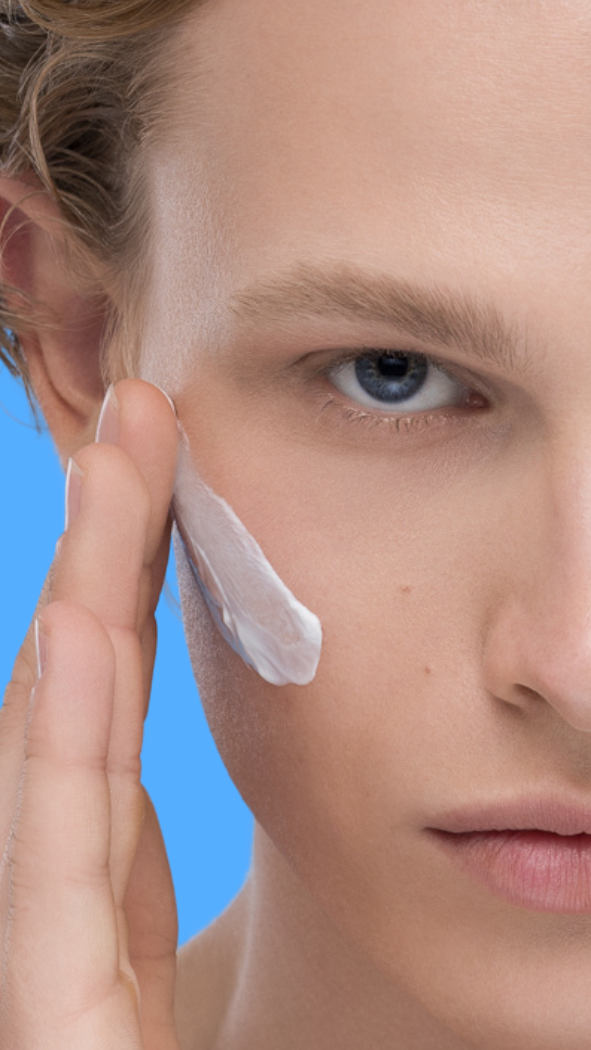
Moisturiser is best applied to slightly damp skin – right after toning – as this helps lock water into the stratum corneum. Apply it with gentle patting motions, avoiding excessive rubbing and stretching of the skin, especially around the delicate eye area. Adjust the amount to your skin’s needs – too thin a layer will not provide enough hydration, while too thick a layer may weigh the skin down.
In the morning, use moisturiser as the last skincare step before make-up or sunscreen – hydrated skin copes better with sun exposure, air pollution and temperature changes during the day. In the evening, apply it as the final step of your bedtime routine, after serum and other lighter products – it is at night that the skin has the best conditions to regenerate and rebuild its protective barrier.
FAQ: face moisturiser – questions and answers
What is the best Dermedic moisturiser?
There is no single, universal “best” cream – the choice depends on your skin type. For dry skin, choose the Hydrain Deep Moisturising Cream; for sensitive skin, a cream from the Redness Calm line; and for mature skin, a cream from the Oilage line.
What to combine moisturiser with in your daily routine?
Moisturiser works best combined with gentle cleansing, toning and a hydrating serum applied before the cream. In the morning, also use sun protection with SPF.
What is the most versatile moisturiser?
Creams from the Hydrain line, based on hyaluronic acid and thermal water, suit most skin types – especially dry, dehydrated and normal skin – because they hydrate intensely without weighing the skin down.
References
1. Pons-Guiraud A, Rodrigues L. Dry skin in dermatology: a complex physiopathology. PubMed PMID: 17716284.2. Barco D, Giménez-Arnau A. Xerosis: una disfunción de la barrera epidérmica [Xerosis: a dysfunction of the epidermal barrier]. Actas Dermosifiliogr. 2008 Nov;99(9):671-82. Spanish. PMID: 19087805.
3. Held E et al. Effect of long-term use of moisturizer on skin hydration, barrier function and susceptibility to irritants. PubMed PMID: 10086859.
4. Luo Y, Hoshi A, Kasakawa Y, Ou-Yang H. The Benefits of Regular Use of Moisturizer to Skin Aging Prevention: A Six-month Evaluator-Blinded Randomized and Controlled Clinical Study. 2023. DOI: 10.13140/RG.2.2.29219.43042
5. Bravo B, Correia P, Gonçalves Junior JE et al. Benefits of topical hyaluronic acid for skin quality and signs of skin aging: From literature review to clinical evidence. Dermatol Ther. 2022. PMC10078143.
6. Murphy B et al. Alteration of barrier properties, stratum corneum ceramides and microbiome composition in response to lotion application on cosmetic dry skin. Sci Rep. 2022 Mar 26;12(1):5223. doi: 10.1038/s41598-022-09231-8. PMID: 35340018; PMCID: PMC8957616.






















.webp?width=1600&height=442&name=Group%2090%20(1).webp)


